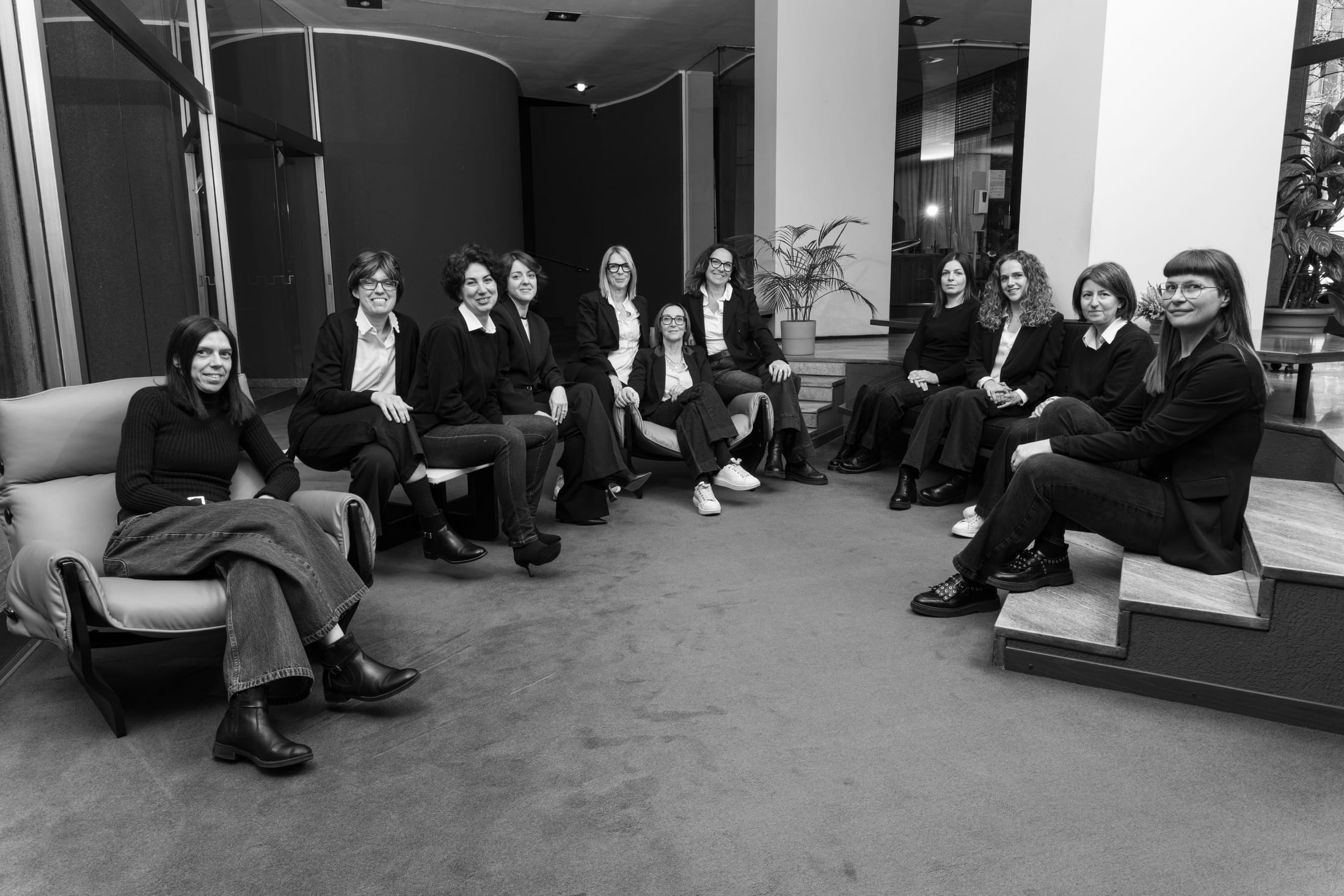
Eight out of ten workers choose their job also on the basis of the company welfare plans offered and nine out of ten, among those who do not take advantage of them, would like to have the opportunity
What is corporate welfare
Corporate welfare is understood as the set of benefits and services provided by the company to its employees in order to improve their private and working lives, starting from support for family income, study, parenting, health protection, up to proposals for time and commercial benefits.
We are talking about a type of integrative welfare, therefore distinct from the public and state one, whose logic is based on collective benefits with clear and priority purposes of supporting income, family life and the balance between work and family needs.
The reference regulatory framework is based on the following pillars:
- complementary social security (Legislative Decree 5 December 2005 n.252);
- supplementary healthcare (Ministerial Decree 27 October 2009);
- benefits or non-monetary benefits (Presidential Decree 22 December 1986 n.917).
The breaking point of state welfare
The national social and economic context is characterized by low economic growth and a continuous reduction in spending on services in GDP, which causes an increase in inequalities and a slowdown in development.
Italy has one of the highest total unemployment rates in the EU (8.1%), preceded only by Spain and Greece, which generates, together with other factors, an increase in requests for social security and protection. These requests are no longer fully and promptly responded to by public welfare, both in terms of types of benefits and in terms of their amount.
We are therefore moving towards overcoming the statist conception of welfare and a mixed system with the participation of the State, entrepreneurs, trade unions and third sector organisations.
The importance of corporate welfare for the community and the company itself
Improving the overall well-being of employees therefore becomes an objective of companies: it has been demonstrated that an increase in the general well-being of workers and the company climate corresponds to a direct increase in company productivity and an improvement in internal relations.
Companies operate in an ecosystem, within which they relate to a set of stakeholders (e.g. customers, suppliers, collaborators), and therefore have a social responsibility towards them. The objective for the company is therefore not only the generation of profit for its shareholders, but the distribution of wealth, culture, services and democracy.
87% of the world's workers are unmotivated and perceive work as something separate from life; this makes it essential to introduce a welfare plan capable of paying attention to the well-being of workers, providing adequate responses to their different needs: from the creation of a work environment characterized by low levels of stress, mutual trust, high degree of worker involvement, good relationships with colleagues and superiors, good work-life balance, job security and attractive salary level, up to other aspects such as the opportunity to travel, flexible working models, additional benefits, employee support programmes.the family.
Corporate welfare is to all intents and purposes a tool for engagement, employee loyalty, involvement in the company's objectives and attraction of new and young talent.
SMEs and corporate welfare
Not only large companies, but also small and medium-sized ones are progressively developing great sensitivity on the matter. In particular, the Italian SME sector presents ample margins for future growth in terms of planning and implementation of projects for the well-being of its employees: only a few use welfare plans, therefore benefiting only to a minimal extent from the opportunities that tax legislation offers.
From the survey of the Fondazione Studi Consulenti del Lavoro, in collaboration with Sodexo Benefits & Rewards Services Italia, on the spread of corporate welfare among small and medium-sized businesses and on its development prospects in the coming years, it emerges that the pandemic and inflation have led to an increase in companies' interest.
The request for corporate welfare tailored to SMEs is that it be lean, agile and flexible, but above all economically sustainable for a small company.
The design of a Corporate Welfare Plan requires diversified skills that cannot be traced back to the figure of the entrepreneur alone, therefore not only of a corporate nature, but also in labour law and tax matters. The professionals in these areas stimulate and accompany the entrepreneur in the management of human resources and in the construction of the welfare plan.
Further help is offered by technology, more precisely by corporate welfare platforms that help make the development and management of welfare plans easier, through automated procedures and numerous services to improve the quality of life and purchasing power of employees and their families. Among the numerous advantages that derive from using the platform, the main one concerns savings in terms of time and costs, therefore the optimization of efforts for the company, the consultant and the employee.
Companies of any size and geographic location can thus create successful corporate welfare plans limiting the organizational and management impacts on their resources.
Do not hesitate to contact our consultants for further information regarding corporate welfare.